When the Market Gets Nervous, Should You Sell? I Tested Over 5,000 ETFs.
The market drops a few percent. The headlines turn red. Your stomach knots — should you get out? Almost everyone treats a nervous market like a crash about to happen. It usually isn’t. So I stopped guessing and ran the same test on every U.S. fund I could get: over five thousand of them, through fifteen years. This is the written companion to the video.
If your gut says “sell” every time it feels shaky, the number you’re paying isn’t tiny. And it isn’t obvious until you measure it.
Nervous is not a crash
Think of the market like the weather. Most days are calm. Once in a while a real storm hits — a crash. In between, there is a third kind of day almost nobody names: the cloudy ones, when the market gets nervous. The swings get bigger, fear is up — but nothing has actually broken.
The catch: “nervous” means more volatility — but not for every asset the same way. Some get punished. Others barely flinch. Whether you should do anything about a nervous day depends entirely on what you’re planning to switch into.
Nervous is common — and mostly harmless
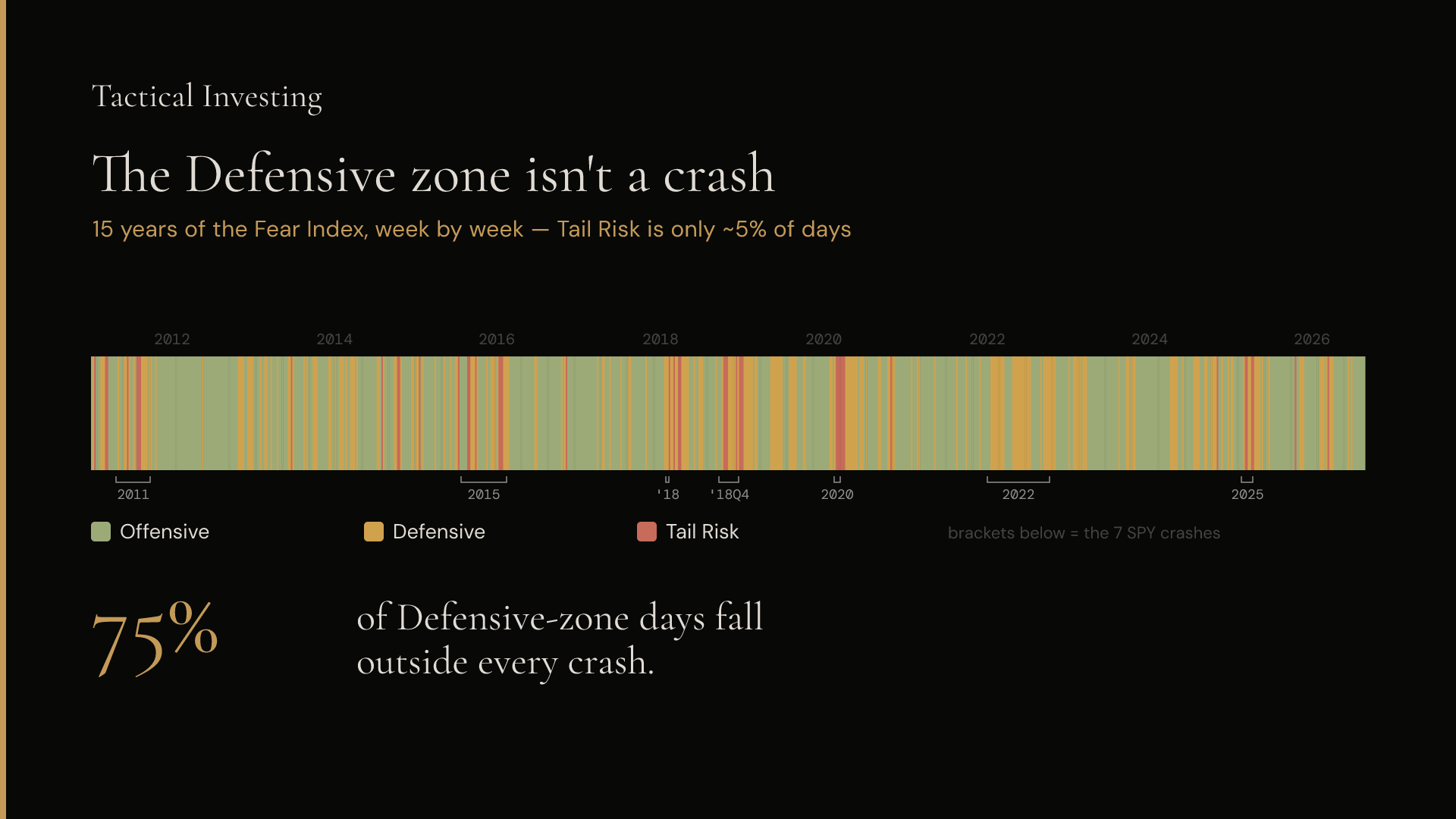
Once you actually count nervous days, the first surprise is how many there are. About one trading day in three qualifies. That isn’t rare. That’s ordinary life for your portfolio.
The second surprise is how few of them are dangerous. Roughly three quarters of nervous days happen nowhere near a real crash. The genuine storm — the kind you’d want to be out of — is only about one day in twenty.
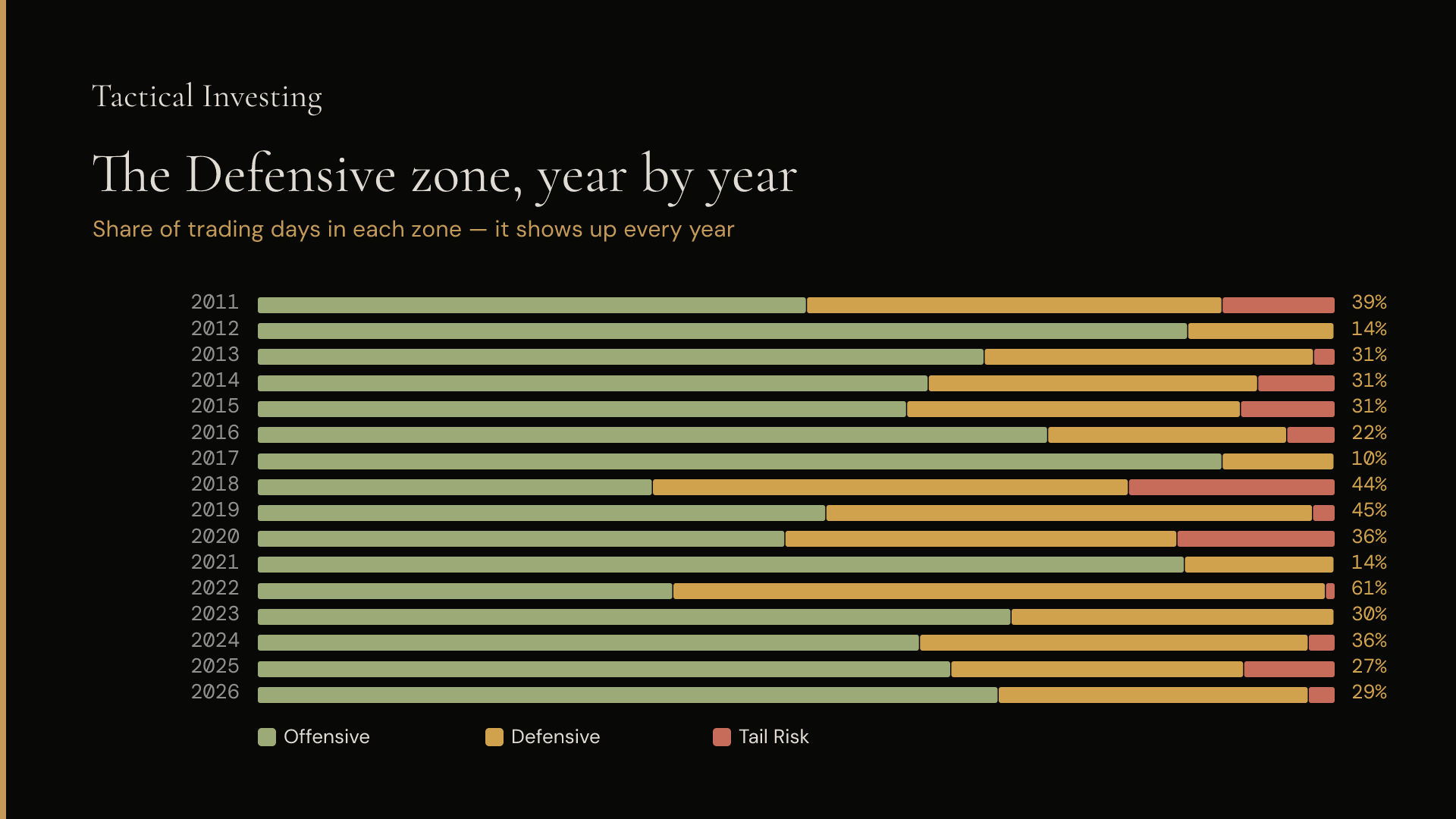
Put those two together and the reflex to sell every time it feels scary starts to look expensive. Which raises the question that decided the whole video: what does the market usually do next?
The market usually keeps rising when nervous
You would expect nervous days to be losing days. They aren’t. Add up everything the S&P 500 did across those nervous days over fifteen years — it didn’t fall. It climbed. In a nervous market, the scary down-days are typically followed by up-days.
Of the forty-six nervous stretches in that window, four in ten never became a storm at all — and the market ended higher about half the time. So the reflex to sell might be the mistake. The only way to know is to test it properly.
One rule, five thousand funds
I didn’t pick a few favourites. I took every U.S. fund I could get — basically the whole market you can buy — and ran every single one through the exact same rule.
The rule, in one sentence:
When the market is calm, hold the market. When it turns nervous, don’t run — tilt into the fund we’re testing. Only in a real storm do you step aside to cash.
Same signal, same fifteen years, every one of five thousand funds. Then I ranked them.

The counter-intuitive result: fleeing costs you
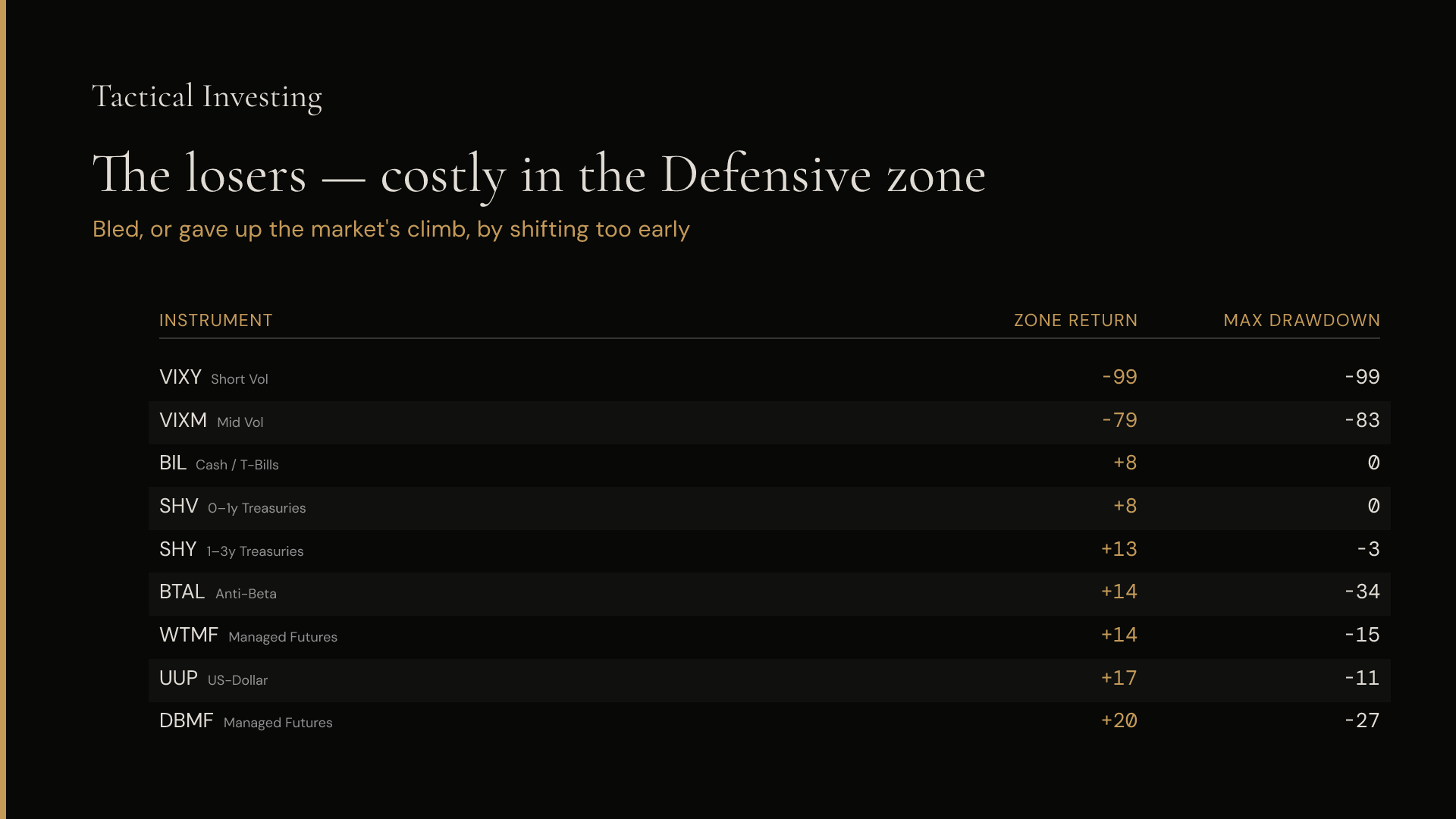
Start with the moves people reach for when they feel scared. The obvious one is buying volatility — literally sold as crash insurance. Watch what happens if you flip into it on every nervous day:
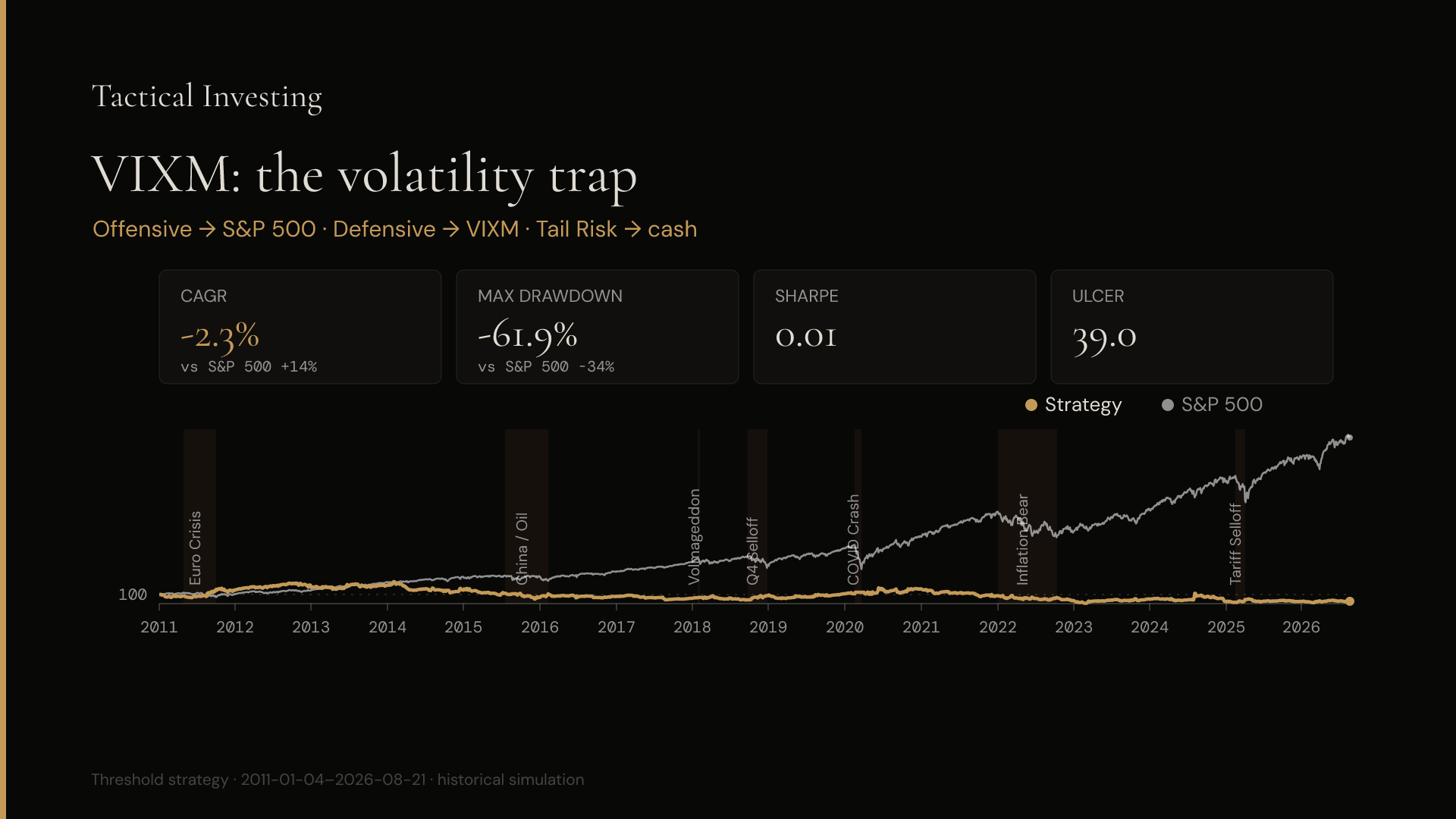
Why? Because nervous is not the same thing as a crash. You paid the premium on all the false alarms and there weren’t enough real storms to earn it back.
Then the classic flight to safety: long-term government bonds. The textbook safe haven.
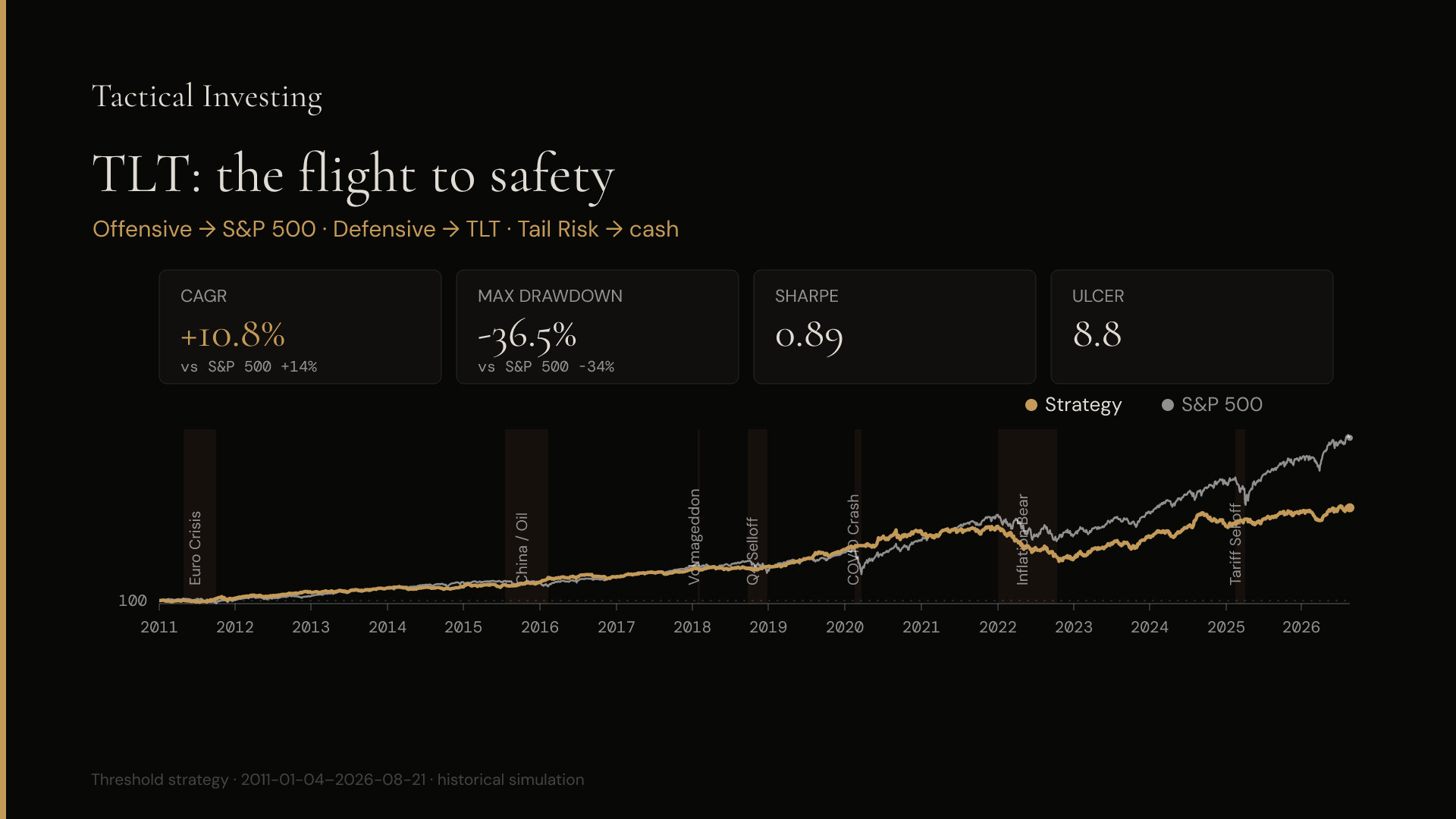
And it’s not just those two. Out of thousands of “safe” moves, only about two percent beat simply staying in stocks until things went truly extreme — on both return and the worst drop. The bar was already high: hold, and go to cash only in a real storm. Fleeing at every nervous flicker had to clear that bar. Almost nothing did.
What actually held up: stay in, but calmer
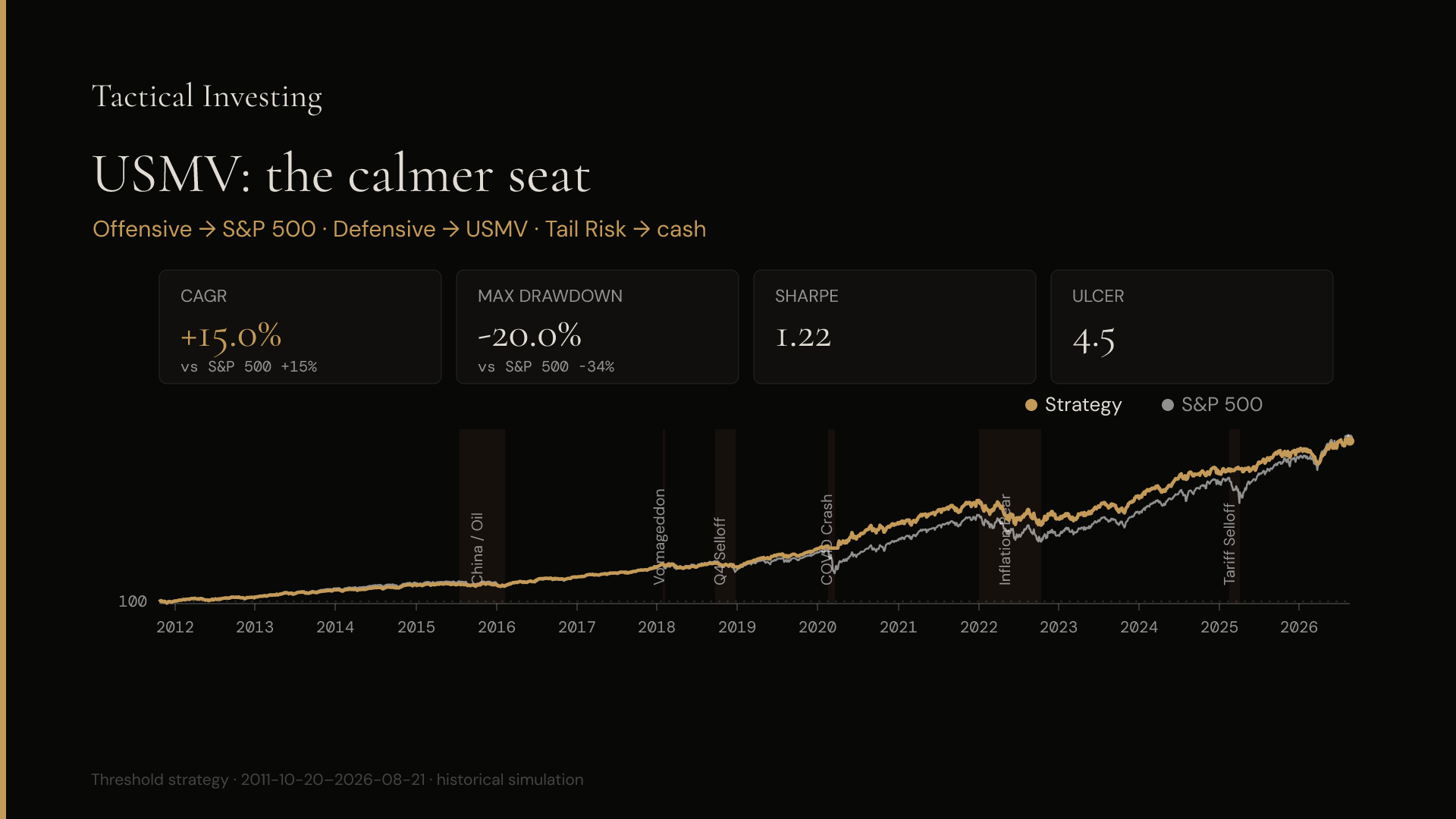
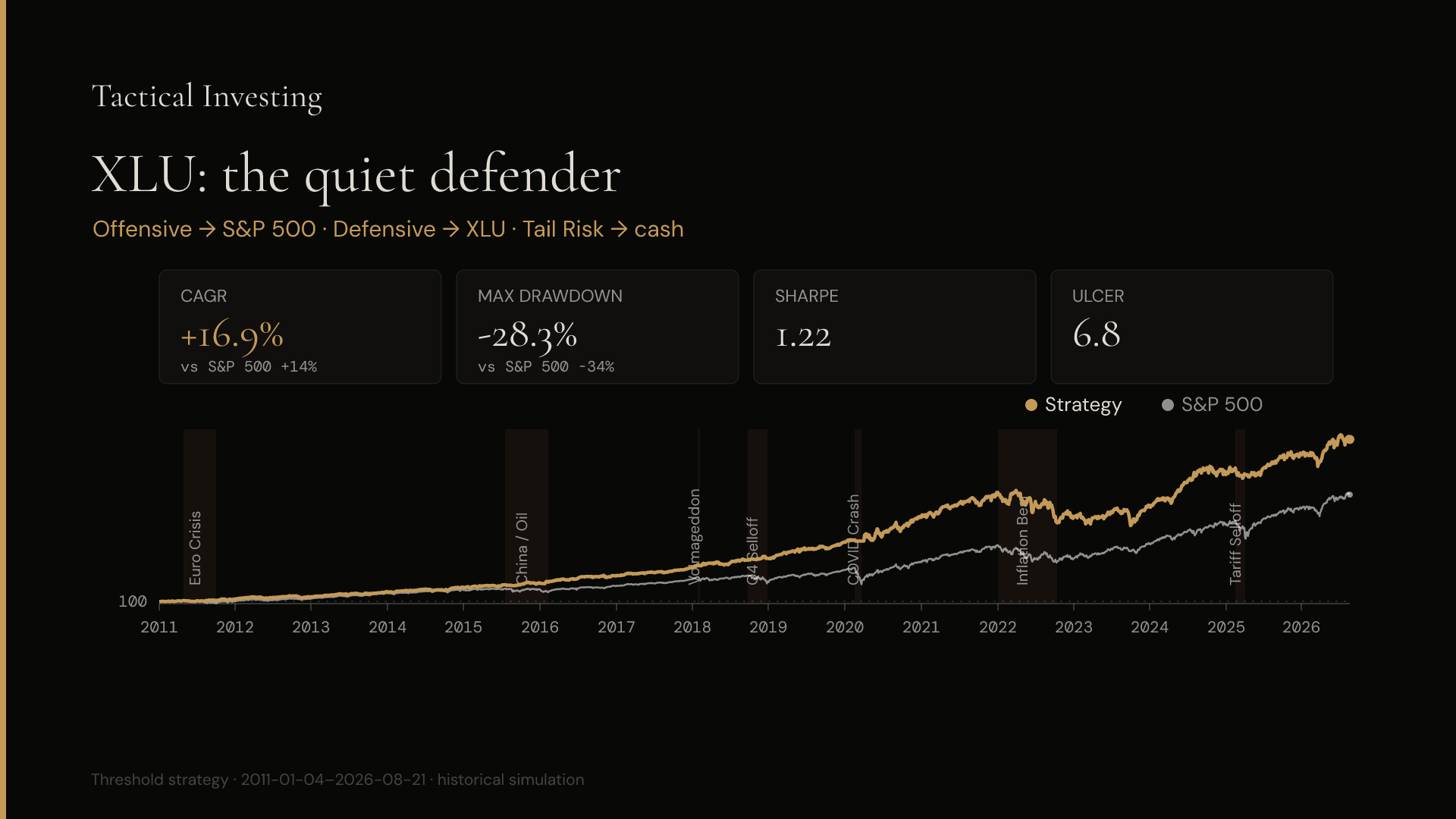
The winners weren’t the safe havens at all. Not gold, not bonds, not cash. They were still stocks — just calmer ones. Three stood out.
1. Low-volatility stocks — the same market, just its steadiest names.
2. Utilities — the boring, essential companies that keep the lights on.
3. A solid dividend fund — the familiar one half of you already own.
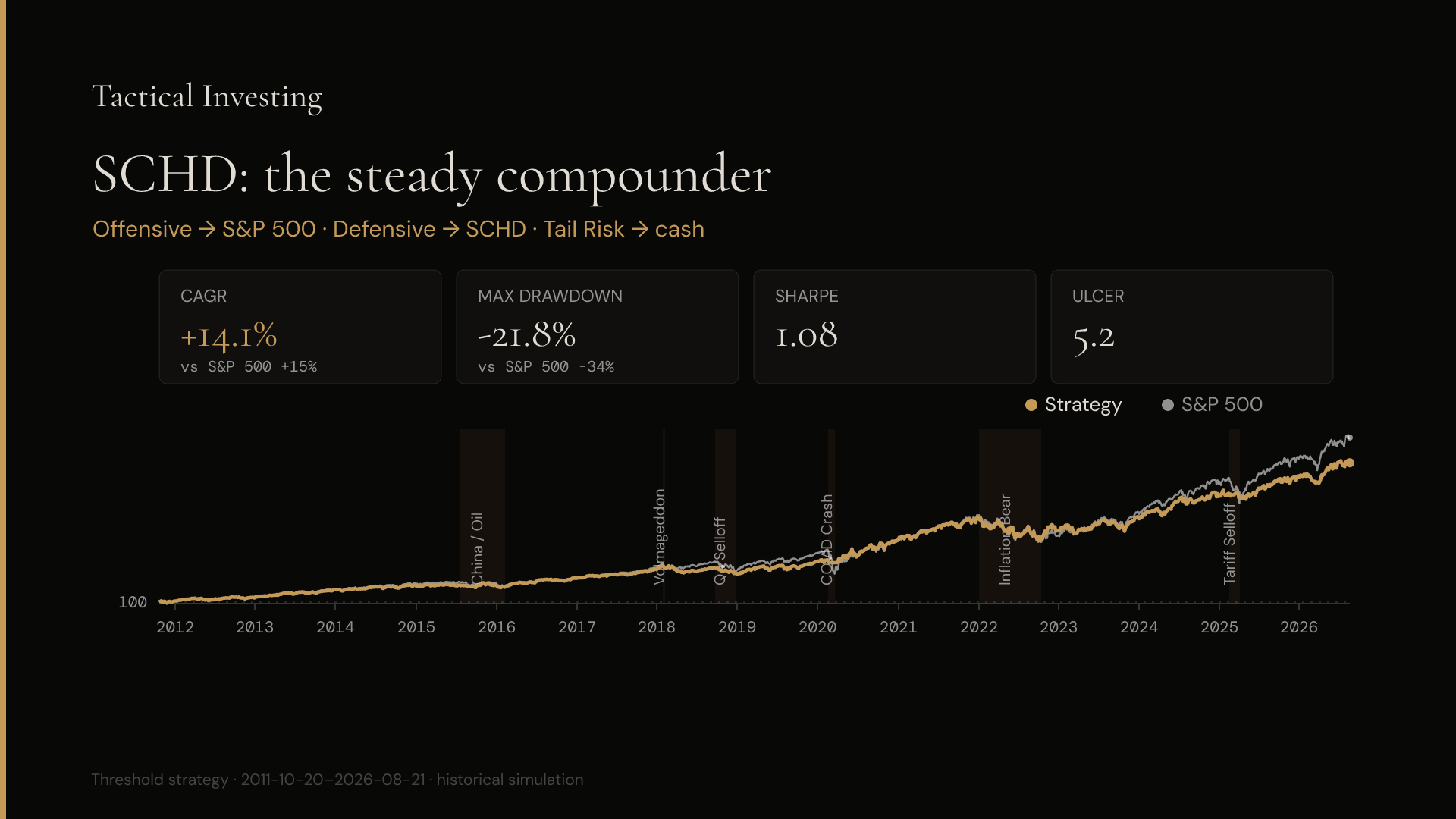
Every winner stayed IN the market — just in its calmer corners. You didn’t need to escape the market; you needed a calmer seat in it.
The takeaway
Nervous is not a crash. Selling every time it gets scary usually costs you: you sell the noise and miss the climb. What actually held up wasn’t the flight to safety — it was staying invested in steadier stocks, and only reaching for cash in a true storm.
If I had to compress fifteen years of nervous markets into one sentence:
Tilt defensive. Don’t flee.
Every fund I tested — search yours
One honest note before the table. Read both numbers, not one. Performance is what the fund did during the nervous days themselves — the in-between days, neither calm nor storm — compounded across fifteen years. Max DD is its worst drop within those same days. A calm winner doesn’t have to leap — it just has to hold up while the market catches its breath.
Only funds with at least eight years of history are listed — enough time to have lived through multiple nervous stretches, real and false. That leaves 1,495 funds out of the roughly five thousand tested. A further twenty-eight were removed after a check of the price data itself: a ticker that gets re-used for a new fund can drag a dead security’s old quotes along with it, and a fund whose history isn’t its own doesn’t belong in a table like this. Leveraged and inverse products are hidden by default; the toggle below the table brings them back in.
Why measure it at all
The point of the video — and this post — isn’t to hand you a fund. It’s to give you a way to check the folklore yourself. Ask an AI on its own and you’ll get the reflex answer: “it’s shaky, get defensive, buy bonds, buy vol.” Give it a way to actually measure every nervous stretch of the last fifteen years, the same way, and you get the honest, boring, awkward answer instead.
You don’t have to take my word for it — you can run this exact idea yourself on your own rules and your own instruments. That’s the whole idea behind this series.
Test it. Don’t trust it.
For educational purposes only — not financial advice.